FIRE & GAS DETECTION EMERGENCY SHUTDOWN SYSTEM

Cogeneration Power Plant

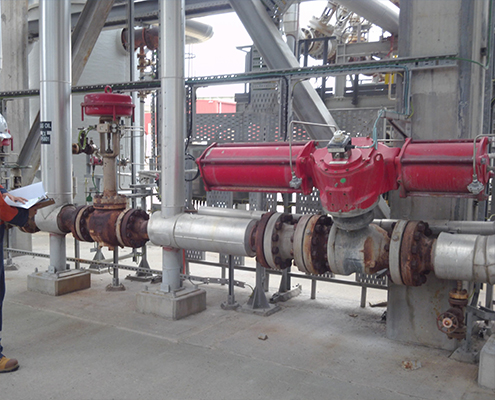
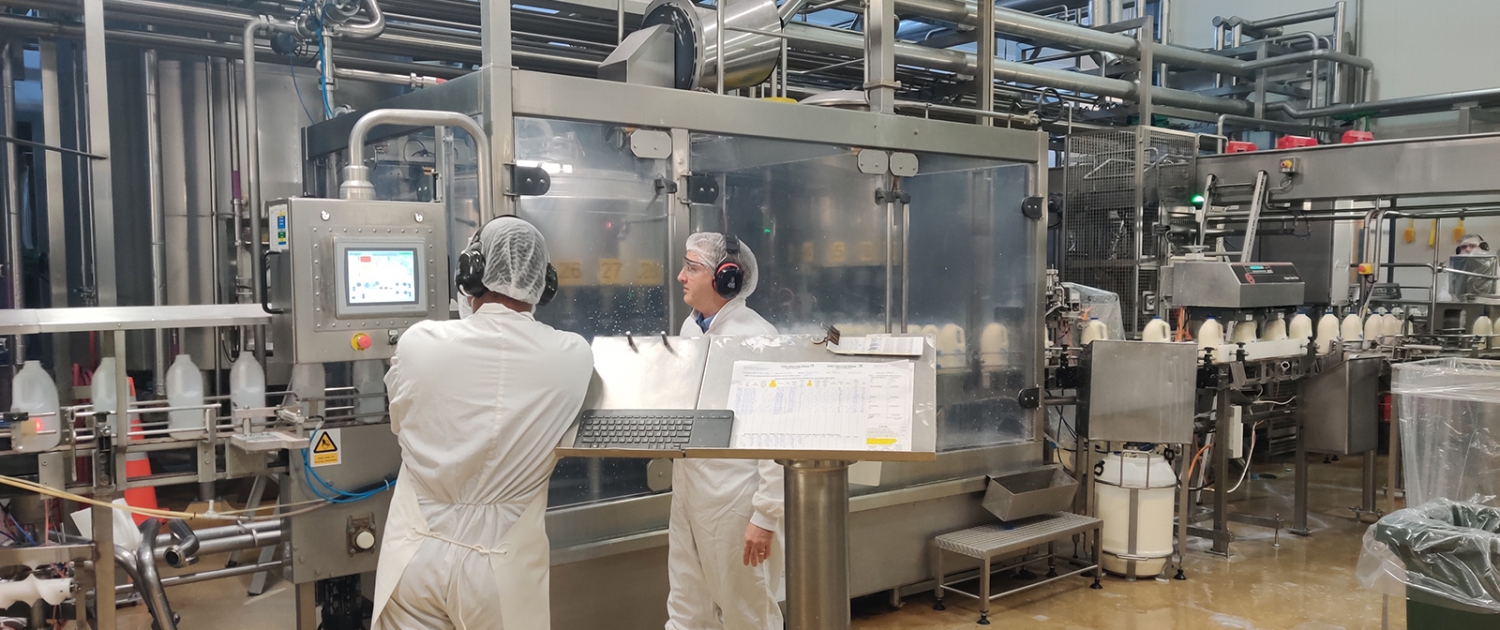
Our client, a global dairy operator, had an outstanding HAZOP action to consider flammable gas detection for their cogeneration power plant operating 4 turbines on 35barg natural gas. They did not know whether a fire and gas detection was needed and so turned to Rimmer Engineering for assistance.

Our safety team led a risk assessment for evaluating the risk of combustible gas leaks, explosion and flames. A risk assessment is an essential first step in establishing the requirement and design for a fire and gas detection system. After evaluating alternate risk reduction measures such as eliminating or shifting equipment, the risk assessment team decided that a fire and gas detection system was required.

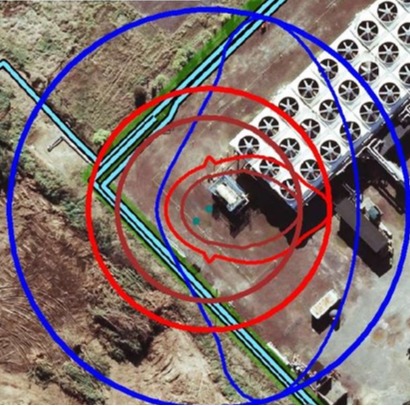
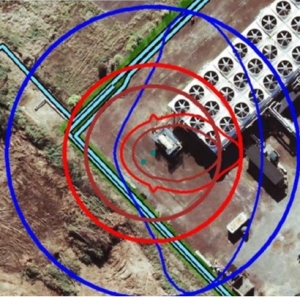
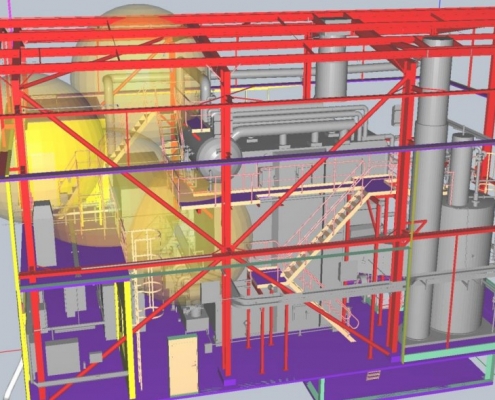
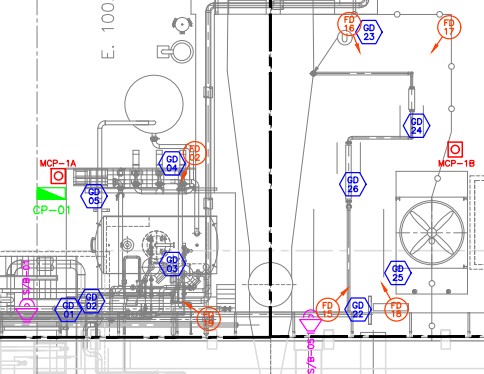
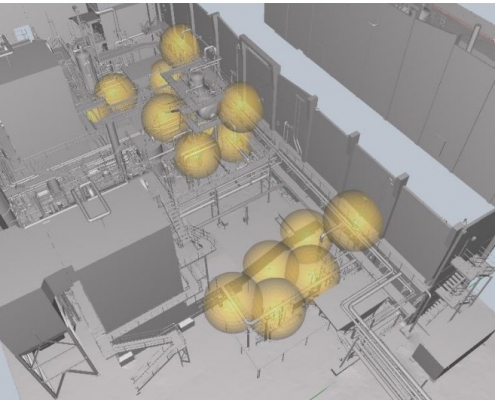
Rimmer Engineering was then immediately engaged to design a fire and gas detection system with emergency shutdown capability. We first separated the plant into firezones, each with their own risks and mitigation requirements. We modelled the consequences of credible scenarios using PHAST and created the detection philosophy which included 2ooN voting to increase plant reliability. Our technical experts evaluated the correct type of detector, with point detectors being preferred over line-of-site for gas detection, due to the dense nature of piping with numerous obstacles at height. Infra-red flame detectors were selected for escalation scenarios. The optimal location and quantity of detectors was validated using HAZMAP 3D software operated by international experts Micropack. Automatic vent valves reduced the inventory and were sized, based on a balance between a quick depressuring time versus the hydraulic constraints in the vent header. To reduce the risk so-far-as-is-reasonably practicable (SFAIRP) we removed redundant piping associated with a knock-out drum and added flange guards to prevent a potential jet leak across a roadway.

Re-routing of 600# piping required mechanical piping design, stress analysis and civil structural design, all of which was seamlessly executed by our multi-discipline team who produced Issued for Construction workpacks.

Overall, the project cost was NZ$2.5 million (including the mechanical modifications). The client, highly impressed with our work, immediately engaged Rimmer Engineering to assess their other sites.
Read more

FIREMAIN TROUBLESHOOTING AND PROCESS CONTROL MODIFICATIONS

NZ Oil Company

Our client’s firemain was experiencing problems with the control of the seawater fire pumps. Erratic control of the firemain pressure potentially created a risk of surge pressures. They were also dissatisfied with the yearly maintenance costs of the pumps and recycle valves.

A planned upgrade to a new control system for the seawater pumps was estimated to cost close to NZ$1M. Rimmer Engineering was engaged to review the entire system prior to a decision on the upgrade.

By working alongside the client, we were able to immediately identify the core functionality required. Our extensive experience of dealing with pumps meant we were then able to simplify the process control logic by stripping out redundant coding and removing superfluous interlocks. A smaller jockey pump was installed with a head curve that could be run continuously and which avoided the low flow turndown case of the recycle valves which had been causing their damage. In addition, we optimised the set points of the anti-surge control valves ensuring a smooth transition on start-up of the pumps.

The implementation of our changes cost our client less than NZ$50,000.

By adopting a pragmatic and commercial approach, we achieved a hugely successful outcome for our client which not only resolved the core problem without disruption to operations, but also saved our client substantial maintenance and capital costs.

Read more

HYDRODESULPHURISER OFFGAS DEBOTTLENECKING

NZ Oil Company

Our client’s production unit was limited by a bottleneck in the gas processing lines. The offgas control valve was assumed to be undersized, as it was operating in a wide-open position. Rimmer Engineering was therefore engaged to specify and procure a larger control valve.

Our extensive experience of control valves and hydraulics meant that instead of adopting assumptions as to the cause of limitations, we recommended on the strongest possible terms that before purchasing a new control valve, the operators conduct a pressure survey with a manual pressure gauge. Rimmer Engineering coordinated the testrun at low and high flowrates, and our team worked together with the client’s process engineers and operations team to collect the pressure data to the benefit of all.

Rimmer Engineering’s hydraulic modelling tool was used to replicate the testrun results. These revealed that the real limitation was the upstream heat exchangers and pipework, and that replacing the control valve would yield no improvement. The intended capital spend on the control valve was therefore diverted to a new project for debottlenecking the linework.

This was an example of the huge benefits of team working with the client and its onsite process engineers. By complementing the client’s unit knowledge with our hydraulic expertise and careful analysis at the outset we were able to successfully identify the real issue for the client and therefore ensure the correct solution to their great satisfaction.

Read more

HYDRODESULPHURISER OFFGAS DEBOTTLENECKING

NZ Oil Company

Our client’s production unit was limited by a bottleneck in the gas processing lines. The offgas control valve was assumed to be undersized, as it was operating in a wide-open position. Rimmer Engineering was therefore engaged to specify and procure a larger control valve.

Our extensive experience of control valves and hydraulics meant that instead of adopting assumptions as to the cause of limitations, we recommended on the strongest possible terms that before purchasing a new control valve, the operators conduct a pressure survey with a manual pressure gauge. Rimmer Engineering coordinated the testrun at low and high flowrates, and our team worked together with the client’s process engineers and operations team to collect the pressure data to the benefit of all.

Rimmer Engineering’s hydraulic modelling tool was used to replicate the testrun results. These revealed that the real limitation was the upstream heat exchangers and pipework, and that replacing the control valve would yield no improvement. The intended capital spend on the control valve was therefore diverted to a new project for debottlenecking the linework.

This was an example of the huge benefits of team working with the client and its onsite process engineers. By complementing the client’s unit knowledge with our hydraulic expertise and careful analysis at the outset we were able to successfully identify the real issue for the client and therefore ensure the correct solution to their great satisfaction.

Read more

TANK COMPLIANCE WITH MAJOR HAZARD REGULATIONS

Major Hazard Facility

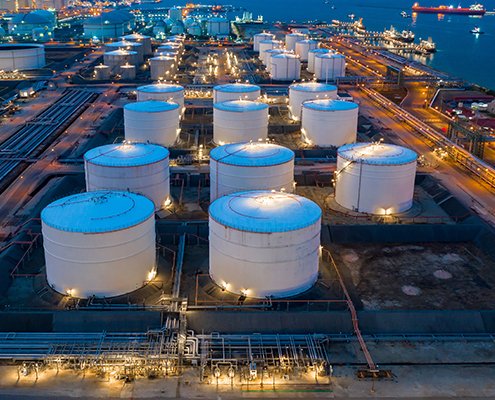
Our client, an oil company, was potentially facing a multi-million dollar capital expenditure for tank and bund upgrades for more than 40 hazardous tanks. This was due to complex issues arising out of (then) new regulations and the existing hazardous tank compliance plans.

Rimmer Engineering worked collaboratively with our client’s Tank Asset Team, the Tank Certifier, and Worksafe to resolve the complex issues at stake and to maximise the possibility of a successful outcome. We managed the implementation of over 40 new hazardous tank compliance plans, identified any areas of potential non-compliance with the (then) new Health and Safety at Work Hazardous Substances Regulations 2017, and optioneered and prepared scopes of work for secondary containment bund upgrades.

By relying on our technical expertise, and our experience in compliance regulations, we were able to put forward robust options on our client’s behalf to Worksafe, enabling a negotiated solution to be achieved which allowed re-certification for all 40 tanks without disruption to operations.

Consequently, Rimmer Engineering was awarded the project management of a year-long programme of works to close out audit actions. We assessed and applied regulations and standards (both local and international including the Buncefield recommendation) to the design of secondary containment bunds, and upgrades to the tanks’ firefighting.

Read more

REFRIGERATION SYSTEM CONCEPT SELECTION AND PROCESS SAFETY

International Dairy Company

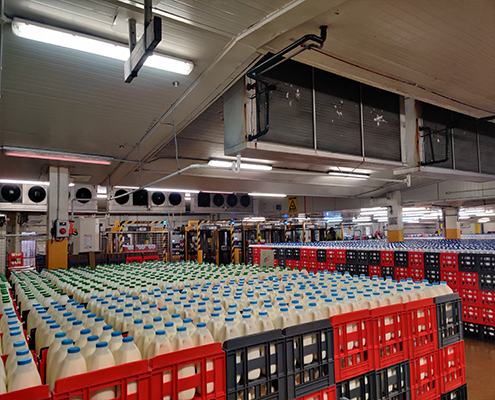
The decision to repair or replace refrigeration equipment was a commercial imperative for our client. The refrigeration equipment at their beverages warehouse was nearing the end of its serviceable life. Consequently, evaporator units were frequently breaking down, causing an increase in repair frequency and downtime.

The client sought urgent advice from Rimmer Engineering as to the best option between repairing or alternatively installing a new refrigeration system. On-time and on-budget delivery was key, so it was crucial to ensure that any refrigeration system was able to be quickly and cost-effectively installed with as few structural modifications as possible.

The most immediate task was to compare the relative merits of utilising the existing ammonia/glycol refrigeration system, against a brand-new standalone chiller using either ammonia, R410A or CO2, against criteria of CAPEX, OPEX, and safety and environmental aspects. Under tight deadlines, our detailed investigations identified replacement as the best option. The CO2 refrigeration system was swiftly selected, and the Process Safety team at Rimmer Engineering completed the HAZID, HAZOP, consequence PHAST modelling of a BLEVE and leak scenarios, Risk and SFAIRP assessments.

The ultimate benefit for our client was having the full range of Rimmer Engineering’s expert process support on board. Our prompt technical advice gave the client clarity, enabling it to see that the continual repair of outdated equipment was not economical when compared to the alternative options of investing in newer and higher-efficiency refrigeration systems. Our process safety arm was then able to ensure that the appropriate risk assessments and mitigations were implemented.

Read more

Rimmer Engineering

A

Rimmer Engineering

A

Rimmer Engineering

A

REFRIGERATION SYSTEM CONCEPT SELECTION AND PROCESS SAFETY

International Dairy Company

The decision to repair or replace refrigeration equipment was a commercial imperative for our client. The refrigeration equipment at their beverages warehouse was nearing the end of its serviceable life. Consequently, evaporator units were frequently breaking down, causing an increase in repair frequency and downtime.

The client sought urgent advice from Rimmer Engineering as to the best option between repairing or alternatively installing a new refrigeration system. On-time and on-budget delivery was key, so it was crucial to ensure that any refrigeration system was able to be quickly and cost-effectively installed with as few structural modifications as possible.

The most immediate task was to compare the relative merits of utilising the existing ammonia/glycol refrigeration system, against a brand-new standalone chiller using either ammonia, R410A or CO2, against criteria of CAPEX, OPEX, and safety and environmental aspects. Under tight deadlines, our detailed investigations identified replacement as the best option. The CO2 refrigeration system was swiftly selected, and the Process Safety team at Rimmer Engineering completed the HAZID, HAZOP, consequence PHAST modelling of a BLEVE and leak scenarios, Risk and SFAIRP assessments.

The ultimate benefit for our client was having the full range of Rimmer Engineering’s expert process support on board. Our prompt technical advice gave the client clarity, enabling it to see that the continual repair of outdated equipment was not economical when compared to the alternative options of investing in newer and higher-efficiency refrigeration systems. Our process safety arm was then able to ensure that the appropriate risk assessments and mitigations were implemented.

Read more

Rimmer Engineering

A

Rimmer Engineering

A

SILO EXPANSION AND A2 MILK REVAMP – CONCEPT AND FEED

International Dairy Company

Our client was experiencing a rapidly expanding demand for A2 and organic milk but did not have the storage or processing capacity. Rimmer Engineering came on board to determine the best solution for additional milk silos and debottlenecking the pasteurisation equipment.

Working collaboratively with our client’s site team and utilising our extensive experience in brownfields revamps, we identified the current and future processing requirements for each type of milk. We optimised the best addition of new raw milk and product silos to minimise any expensive valving manifold changes and identified the utility constraints in the pasteurisation process.

Rimmer Engineering subsequently completed the Front-End Engineering Design (FEED) for the project and produced equipment datasheets, P&IDs, piping hydraulics and utility energy balances. We created the project basis of design, allowing EPC contractors to cost against a firm basis with no variations, giving our client confidence on the overall cost for construction.

Delighted by the successful outcome of the Silo Expansion and Milk Revamp, our client invited Rimmer Engineering to provide continued onsite operational troubleshooting, such as dealing with foaming in the bottle fillers. Following our detailed review of the milk properties and the process variables that could contribute to foaming, we recommended over 20 improvement items. These ranged from simple operational changes through to detailed process control modifications.

Working alongside our client’s site team, we assisted in implementing these adjustments and successfully achieved a significant reduction in foaming. The ultimate benefit for the client has been a far more efficient process with less product loss and waste-treatment costs.

Read more

Rimmer Engineering

A

FLARE TECHNICAL STUDY AND MODELLING

Petrochemical Complex

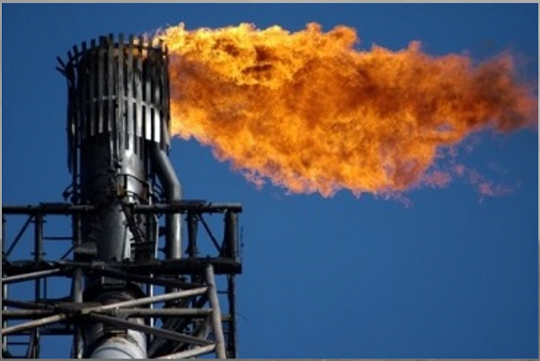
Our client, a Major Hazard Facility, engaged Rimmer Engineering to complete a capacity study of a flare system and a combustion safety assessment of the flare tip. Their key project was at risk of delay due to high velocities in the flare piping exceeding typical industry norms.

Our design team completed the hydraulic modelling using FlareSpace simulation software to verify the backpressures on relief valves and determine the MACH velocity limitations. We assessed the design cases for a new flare tip design and identified limiting exit velocities with vendors.

Our process safety team performed the consequence analysis for the flameout from the flare column, radiation and dispersion modelling (FlareSim) to assess impact on personnel and equipment resulting from radiated heat, flash fire and toxicity.

By applying our expertise in brownfields revamps of flare piping and our knowledge in acoustic vibration, we were able to assess the impact of excessive piping velocities. This enabled the client to use the existing flare piping without costly modifications which would have put the project at risk. Delighted at the success of the study we were subsequently engaged to provide detailed engineering for sizing of the outlet lines for new depressuring valves, creation of the line list, and calculation of acoustic vibration sound power levels.

Read more

Rimmer Engineering

A

Rimmer Engineering

A

FLARE TECHNICAL STUDY AND MODELLING

Petrochemical Complex

Our client, a Major Hazard Facility, engaged Rimmer Engineering to complete a capacity study of a flare system and a combustion safety assessment of the flare tip. Their key project was at risk of delay due to high velocities in the flare piping exceeding typical industry norms.

Our design team completed the hydraulic modelling using FlareSpace simulation software to verify the backpressures on relief valves and determine the MACH velocity limitations. We assessed the design cases for a new flare tip design and identified limiting exit velocities with vendors.

Our process safety team performed the consequence analysis for the flameout from the flare column, radiation and dispersion modelling (FlareSim) to assess impact on personnel and equipment resulting from radiated heat, flash fire and toxicity.

By applying our expertise in brownfields revamps of flare piping and our knowledge in acoustic vibration, we were able to assess the impact of excessive piping velocities. This enabled the client to use the existing flare piping without costly modifications which would have put the project at risk. Delighted at the success of the study we were subsequently engaged to provide detailed engineering for sizing of the outlet lines for new depressuring valves, creation of the line list, and calculation of acoustic vibration sound power levels.

Read more

Rimmer Engineering

A

Rimmer Engineering

A

Pentane Tank Bund

Geothermal Power Company

Our client, a major energy producer, required additional storage capacity for pentane and planned to install a new 40m³ vessel next to an existing vessel. The regulator required the risk of BLEVE to be reduced to so-far-as-is-reasonably-practical (SFAIRP) which was causing significant angst to the project team. They reached out to Rimmer Engineering based on our reputation in BLEVE mitigation strategies and SFAIRP demonstration expertise.

Our team reviewed all safety aspects, led the HAZID review and produced the consequence analysis. There were any number of mitigative options for BLEVE, from burying the tanks, secondary containment, depressuring valves, deluge systems and passive fire protection. We guided the client through the pros and cons of each option, evaluated the hierarchy of controls and demonstrated SFAIRP.

Our unique blend of professionals is tailored to these risk-based decisions as they require not just process safety professionals, but engineers who can provide designs for each option to enable a cost comparison. To illustrate, our process team analysed the time-to-rupture during a jet or pool fire to size a depressuring system. Our civil engineer provided the concept design drawings for either a local or remote secondary containment bund from which our construction estimator could provide cost estimates. Combined with our process safety team’s evaluation of risk reduction for each option, it ultimately led to an informed decision to demonstrate SFAIRP.

Our client was both grateful and impressed that Rimmer Engineering could simplify a complicated analysis into a straightforward decision.

Read more

Rimmer Engineering

A

Boiler House Gas Detection

International Dairy Company

Our client, a global dairy operator engaged us to determine whether flammable gas detection was required at their sites. Natural gas was used in their boilers and there were numerous potential leak points both indoor and outdoor. We created a risk assessment method based on the relevant industry codes and then applied this to their gas piping and fired equipment. The client was so impressed with the risk-based approach that they incorporated it as their company standard to apply globally.

2 out of the 7 locations required gas detection while the other locations could achieve risk reduction better using inherent risk measures such as eliminating piping, welding flanges, manual operator checks or installation of flange guards.

We then designed the gas detection and emergency isolation system for their boiler house containing 7 barg natural gas. Our process safety team first completed a risk assessment to identify the areas of high risk such as flanges and boiler air intakes and then devised a detection and mitigation philosophy. Detection technology was evaluated and point gas Infra-Red detectors were selected. Our process team designed the depressuring system, P&IDs, cause & effects diagram and functional logic description. We then completed the Issued for Construction (IFC) workpacks by combining with our interdisciplinary engineering team for the stress analysis and civil supports.

The client was grateful that the same engineering team, who understood the overall risks and risk reduction objectives, could take the concept all the way through to construction workpacks. Instead of the concept being handed over to another contractor (who ends up simply implementing mechanical or civil components), the design could be seamlessly refined and optimised which the client said was key to ensuring a successful project on time and on budget.

Read more

Rimmer Engineering

A

Rimmer Engineering

A

Rimmer Engineering

A

LPG Unit – Process Safety Design

Petrochemical Complex

Our client was installing a new LPG proprietary unit into their major hazardous facility and required specialist engineering assistance. Rimmer Engineering was engaged on all process safety aspects of the project, including facilitating risk assessments, advising on explosion safety of buildings, consequence analysis, separation distances, fire and gas detection, firefighting and LPG drainage philosophies.

A key aspect for the client was how the risks might influence the cost. The client was extremely impressed that Rimmer Engineering could identify not just the risk mitigations required but also specify the actual engineering design enabling accurate costing. For example, our civil engineer designed the remote impoundment basin for any spills of LPG.

Ultimately, it is the ability of our multidisciplinary team to provide engineering solutions to the risks which set us apart from other process safety providers who, in comparison, offer only the limited process safety suite of analysis tools.

Read more

Rimmer Engineering

A

PIPING MODIFICATION TO REDUCE EXPLOSION RISK

Global Dairy Company

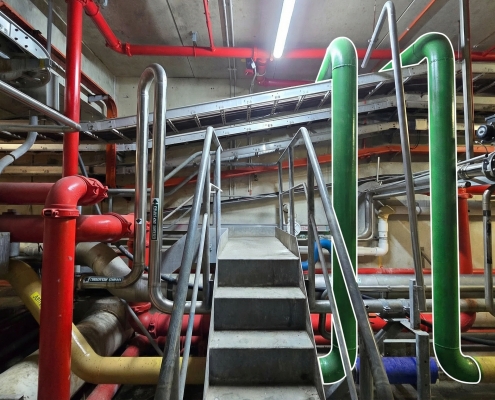
Our client’s risk insurers were not satisfied with the layout of natural gas piping in the underground utility corridor. The main pipeline posed a risk of a confined explosion that could potentially have a secondary effect of destroying the main fire water line.

Our client had decided to install a gas detection system and so engaged Rimmer Engineering for the design. After a site inspection of the 400m tunnel, our experience in the cost of detection systems immediately prompted us to suggest there might be safer, more cost-effective ways to reduce the risk. We recommended taking a step back and first conducting a risk assessment. This concluded that measures such as removing flanges or relocating the pipe outside could replace the need to provide gas detection. We used our design expertise coupled with our specialist safety knowledge to comparatively evaluate each option on a cost and risk reduction basis.

The inherently safer option was selected of fully welded joints inside the tunnel combined with sections of valved piping located outside. Our mechanical design team then completed the FEED stage. The overall cost turned out to be cheaper than the original gas detection system and with greater overall risk reduction. Our client was extremely grateful for steering them in the right direction and for completing the design.

The client was grateful that the same engineering team, who understood the overall risks and risk reduction objectives, could take the concept all the way through to construction workpacks. Instead of the concept being handed over to another contractor (who ends up simply implementing mechanical or civil components), the design could be seamlessly refined and optimised which the client said was key to ensuring a successful project on time and on budget.

Read more

Rimmer Engineering

A

Rimmer Engineering

A

© 2019 Rimmer Engineering. All Rights Reserved.